Your executive assistant is the control tower of your day—when their voice stays steady, every flight lands on time. Still, fewer than half of U.S. EAs remain in one role for more than two years, and a 2024 Prialto analysis puts the replacement cost at 50–200 percent of salary. With demand now outpacing supply, executive assistant retention has become mission-critical. Below, you’ll find four research-backed strategies—tight feedback loops, clear growth paths, meaningful perks, and reliable backup support—that keep top EAs loyal and your schedule airborne.
1. Establish a continuous feedback & recognition cycle

A strong executive assistant acts as the control tower that keeps executive schedules running smoothly.
Recognition fuels executive assistant retention. Gallup’s 2023 Workplace study found that employees who receive high-quality praise are 45 percent less likely to leave within two years.
C-Suite Assistants’ guide to executive assistant retention shows that most departures stem from thin communication and reveals two quick fixes: a standing weekly check-in and instant micro-recognition when an EA nails a deliverable.
In their retention guidance, they recommend regular one-on-ones and honest check-ins so executives can surface concerns early instead of being blindsided by a resignation.
Give that fuel a cadence. A 15-minute weekly check-in keeps goals visible and frustrations small, and managers need about five minutes to review each report in 15Five. Add a quarterly stay-interview to surface deeper concerns before they become job searches.

A clear feedback and recognition loop—weekly 1:1s, micro-praise, tools, and stay interviews—keeps top executive assistants engaged.
Speed and specificity make feedback memorable. Fire off a two-line Slack thank-you after a flawless board deck, or open a team meeting by applauding the EA who aligned six investor calendars into one slot. These micro bursts cost nothing yet compound loyalty.
Software tightens the loop. 15Five and Lattice automate prompts and track progress, while Bonusly converts kudos into points that redeem for gift cards or spa days. The tools handle reminders; you supply sincerity.
Five minutes of feedback beats the weeks you would spend replacing a departed assistant. Pair quick public praise with occasional formal gestures such as spot bonuses or an extra Friday off after a crunch week to show you value the work behind the scenes. When your EA feels seen, heard, and supported, they stay, and your momentum stays with them.
2. Offer growth paths & professional development
Career growth is the strongest predictor of executive assistant retention. Work Institute’s 2024 turnover study lists stalled development as the top quit driver, responsible for one out of every five exits. Show your EA a future, or they will find one elsewhere.
Map a two-year career road
On day one, ask where your assistant hopes to land—chief of staff, operations manager, project lead. Co-write a two-year plan that links today’s tasks to tomorrow’s responsibilities. Milestones could include owning a budget next quarter or mentoring a junior admin by year’s end. Review progress every quarter and update the document as business priorities shift.
Fund learning that moves the needle
Companies with a strong learning culture post 57 percent higher retention, according to LinkedIn’s 2024 Workplace Learning Report. Provide an annual stipend so your EA can choose LinkedIn Learning classes, an Office Dynamics workshop, or the Certified Administrative Professional exam. Protect study hours on the calendar; keeping the promise signals the plan is real.
Pair them with a guide
Mentorship accelerates mastery. Deloitte’s 2023 longitudinal study found 72 percent of employees in mentoring programs stayed at least five years. Match your EA with a senior leader for a 30-minute chat each month, and hold a short debrief after major meetings to explain context they could not see.
Create a career roadmap
Gartner’s 2024 survey of 3,500 workers shows employees who see a clear path are 4.1 times more likely to stay. Put the plan in a living Google Doc, list three stretch milestones, and celebrate visible progress. End each review by asking, “What would make the next 90 days your best yet?” so the roadmap never goes stale.
Invest in professional training & credentials
Cover a LinkedIn Learning course on project management, fund an Office Dynamics summit, or pay the Certified Administrative Professional exam fee and celebrate the pass notice together. Every new skill your EA gains saves you hours down the line and reinforces that growth is a shared priority.
Build a mentorship and coaching loop
Formal mentorship is sticky. Deloitte reports that mentored employees stay longer and perform better. Pair your EA with a leader who has walked their desired path, and coach them yourself after big wins and near misses. They learn to anticipate needs, and you gain a true strategic partner.
3. Recognize, reward & perk up the role
Salary keeps the lights on, but thoughtful perks and public praise keep executive assistant retention high. Organizations with effective recognition programs record 31 percent lower voluntary turnover, according to Bersin research cited in Vantage Circle’s 2025 recognition report. Glassdoor’s 2024 survey adds that 63 percent of U.S. workers say benefits influence whether they stay or accept a job offer.
Match perks to what EAs value most
Ask your assistant directly, then build a menu that fits. Many EAs prize freedom over flash: a monthly flex day, work-from-home Fridays, or a compressed week often beats a small raise. Growth perks matter too, such as a conference pass or an annual learning stipend. A wellness allowance or an Uber credit for school pick-ups can speak louder than swag because it solves a real-life pain point.

Tailored perks and real-time recognition keep executive assistants loyal far more effectively than generic swag.
Turn recognition into a habit
Praise in public, reward in real time. A Slack shout-out plus a fifty-dollar Bonusly credit after a flawless board deck links effort to outcome. Experience rewards like a Blueboard cooking class, a Perkbox wellness retreat, or simply a Friday afternoon off create memories that cash cannot. Keep a modest quarterly budget so managers can act while the win is still fresh; speed matters.
Recognition needs rhythm. Schedule a five-minute kudos round in each team meeting, log wins in Bonusly or Workhuman, and celebrate work anniversaries with a handwritten note. Assistants who feel consistently valued rarely look for greener grass.
Personalize perks for lasting impact
Cash matters, yet Glassdoor notes that benefits and perks heavily influence retention. Ask your assistant which comforts or experiences would make work and life easier, then tailor the package. A fitness-minded EA may prefer a gym membership, while a parent may treasure an occasional rideshare credit for school pick-ups. Perks that solve real pain points signal genuine respect, and respect cements loyalty better than one-size-fits-all policies.
Recognition rewards that stick
- Pair public praise with a token. After a marathon earnings-call prep, leave a handwritten note wrapped around a restaurant gift card.
- Reward outcomes, not hours. If your EA negotiates a vendor discount that saves five figures, announce it at the all-hands and follow up with a spot bonus on the next payroll run.
- Lean into experiences. A Blueboard cooking class, a Perkbox wellness retreat, or a Friday afternoon off to attend a child’s school play creates memories cash cannot match.
Keep recognition simple. Set a quarterly micro-budget, empower managers to act within twenty-four hours of a win, and log every shout-out in Bonusly or Workhuman so the good news lives beyond the moment. Assistants who feel consistently valued anchor their careers, and your executive assistant retention strategy, right where they are.
4. Foster a supportive work environment
Burnout is the silent enemy of executive assistant retention. Gallup’s 2025 State of the Workplace report shows that 44 percent of employees who feel “often burned out” are actively job hunting, compared with 18 percent of their well-rested peers. Build an environment where exhaustion stays rare.
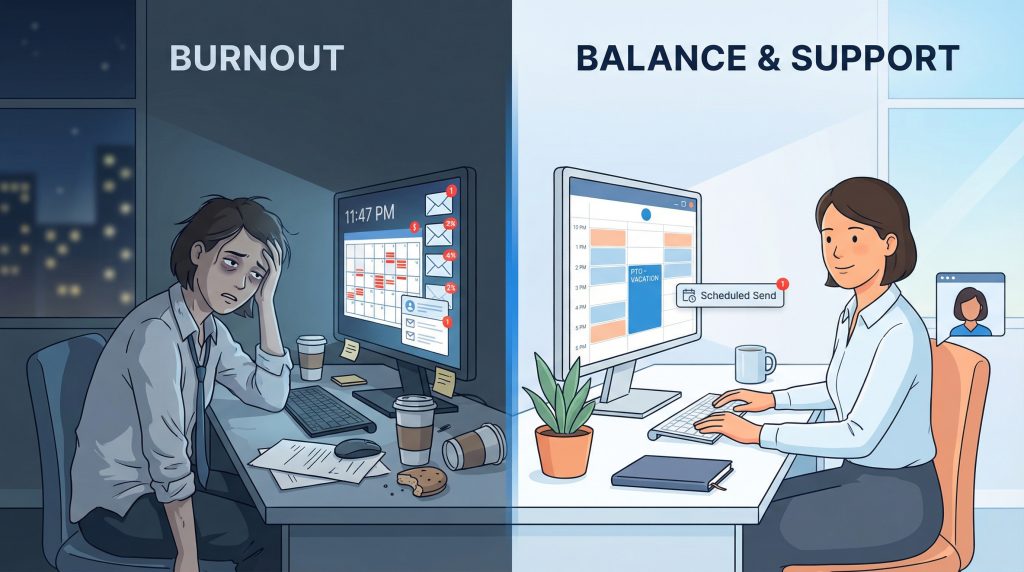
The same executive assistant can burn out or thrive depending on workload, boundaries, and support.
Encourage real work-life balance
- Schedule late-night emails to deliver at 8 am, and state clearly that weekend pings can wait unless the building is on fire.
- Guard vacations by lining up a virtual assistant or teammate before PTO begins and respecting that boundary.
- Review weekly hours; once the total passes fifty, redistribute tasks before overwork turns into a resignation letter.
Balance is not a perk; it is a prerequisite for long-term excellence. Offer it generously and your assistant repays you with focus and loyalty.
Offer flexible and remote work options
Flexibility now drives retention. LinkedIn’s 2024 Workforce Confidence Index reports that 59 percent of professionals rate work-life balance, including hybrid options, as a “very important” reason to stay. Give your EA at least two work-from-home days or shifted hours around family duties. For fully remote partnerships, over-communicate: hold a Monday video stand-up, keep a live priorities doc, and invite the assistant to every meeting where context matters. Inclusion turns distance into commitment.
Lead with respect and provide backup support
Half of U.S. employees have quit “to get away from a manager,” according to Gallup’s State of the American Manager report. Treat your EA as a strategic partner: loop them into planning calls, credit their wins publicly, and address missteps privately. Then add resources so one person is not a single point of failure. A junior admin or a managed service like Pepper Virtual Assistants can handle routine tasks and cover vacations, turning eighty-hour weeks into sustainable forties. The signal is clear: you value genius, not burnout, and assistants who feel both respected and supported stay put.
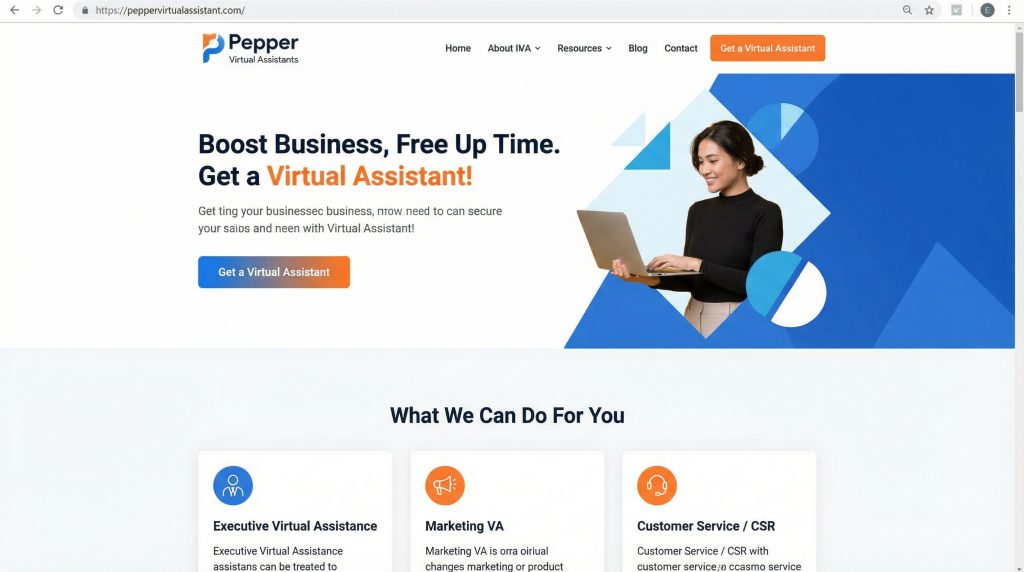
Pepper Virtual Assistants offers managed backup support so your primary executive assistant can avoid overload.
Frequently asked questions
How can I spot an assistant who may leave soon?
Watch for silence where initiative once thrived: missed details, slower replies, and fewer ideas in meetings. A quick stay interview often surfaces solvable pain points. Gallup’s 2023 exit survey found that 52 percent of departing employees said their manager could have prevented the decision with the right conversation.
What if our budget cannot cover a big raise?
Flexible hours, public praise, and clear growth paths often outweigh cash. Gallup’s 2024 research shows that employees are four times more likely to leave for culture or development than for pay or benefits.
Do performance bonuses or equity make sense for an EA?
Yes, when the role protects revenue or saves executive hours. A 2025 Robert Half survey reports that 68 percent of companies offer bonuses to administrative staff. Equity remains less common but is growing at startups for critical support positions.
My assistant works fully remote. How do I keep them connected?
Share context often. Hold a weekly video stand-up, maintain a living priorities document, and invite the assistant to strategy calls. Bring them on-site for at least one planning week each year; face-to-face time strengthens loyalty.
Where does Pepper Virtual Assistants help?
Pepper provides on-demand backup, allowing your primary EA to avoid overload while your inbox stays under control. It functions as an insurance policy for executive assistant retention.
Conclusion
By applying these four proven strategies—continuous feedback, clear growth paths, thoughtful recognition, and supportive environments—you will boost executive assistant retention and keep your organization running smoothly.